On the heels of the Marine Corps’ desire for a new rifle for its infantrymen, the U.S. Army now says it is contemplating a dramatic switch in rifles. The service is considering going back to battle rifles—heavier rifles that can hit targets at longer ranges. The last time the Army fielded such a rifle was in the 1960s.
The story, broke by Soldier Systems Daily, says that U.S. Army troops feel they’re “in a street fight with a guy with longer arms.” That longer arm is the 7.62x54R cartridge, the cartridge used by the PK machine gun and Dragunov SVD sniper rifle. The PK squad machine gun is extremely common; it’s in use by the Taliban, the Islamic State, and most insurgent and terrorist groups worldwide. Longer and heavier than the 7.62×39-millimeter round used in the AK series of assault rifles, a PK with the 7.62x54R round has an effective range of 800 to 1,000 yards, versus only about 350 yards for an AK-47.
On the Army side, the maximum effective range of an M4 carbine against man-sized targets is about 500 yards, depending on the skill of the rifleman, and 700 yards for the M249 squad automatic weapon. Both fire the same cartridge. That leaves a dead zone of roughly 500 to 1,000 yards where the bulk of a nine person infantry squad can’t engage individual enemies. In a platoon of 40 soldiers, on average only about six soldiers armed with M249s, marksman rifles, and M240 machine guns have the range to engage an enemy in the dead zone.
U.S. Army troops may have an edge on paper, but guerrilla groups don’t adhere to a bureaucratic equipment roster that says each unit can have a certain number of weapons. Taliban and IS groups routinely have a large number of heavier machine guns, and what they lack in skill they often try to make up in firepower.
While there are a number of readers who would applaud this move in favor of a 30-06 (the old Garand) or .308 (7.62mm), a “real battle rifle,” I think it will go nowhere and lacks traction. It certainly lack traction with me for reasons I’ll explain.
The excuse that the Taliban shoot machine guns and longer range weapons is disingenuous. As I documented in my coverage of the battle of Wanat, the issue with fighting the Taliban had nothing to do with the M4, and everything to do with deployment of Soldiers in bad locations, slowly enough that the Taliban had time to mass troops on a roughly ten to one ratio. They had a near Battalion size group fighting a platoon size group of Soldiers on low terrain.
There were other problems with Soldiers in the Hindu Kush such as the lack of training in shooting uphill (as well as not owning the high ground). One problem that could be corrected is that the M4s the Army fields have been shot so many times and the parts so worn that they malfunction easily. Many Soldiers don’t know enough to modify their own weapons, wouldn’t be allowed to if they could, and lack the funds to do it. But there are ways to assist your rifle in its accuracy, reliability and longevity.
But take a closer look at what they’re asking for. They want to field the 7.62mm, with its weight additional weight and the weight of the ammunition, and they expect their men (and women, unfortunately) to be able to shoot accurately beyond 500 yards and up to 1000 yards. This will require the use of good optics, not an ACOG or the Army equivalent, but scoped shooting.
My son, Daniel, has been through all of the shooting instruction in these classes, albeit not the observation and tracking. It does indeed take months of training to understand and use high power scopes for precision shooting. For the Army to pretend that they’re are going to send thousands of brand new Soldiers at Fort Jackson into classes to learn parallax, windage adjustments, elevation and humidity effects on shooting, and so on, is a pipe dream.
I’m not suggesting, by the way, that you or your family not have your own higher caliber and bolt action precision chassis weapons as well as your CQB and shorter range weapons, or that you forego the time and accoutrements to use them properly. Every gun has its purpose, and you need all the right tools for the job ahead. I’m suggesting that America isn’t going to make snipers out of their Soldiers by switching from 5.56mm to 7.62mm.
BROKEN ARROW, Okla. (KTUL) — One person is in custody after three suspects in a Wagoner County home invasion were shot to death Monday afternoon by one of the residents.
According to the Wagoner County Sheriff’s Office, the suspects’ getaway driver has been arrested. The 21-year-old woman turned herself in at the Broken Arrow Police Department hours after the shooting, saying she had information.
Investigators haven’t released the names of anyone involved but say the deceased suspects are between 16 and 18 years old. Two of the suspects were armed, according to investigators. One with a knife and the other with brass knuckles.
[ … ]
Mahoney says the suspects broke in through a glass door in the back of the house. After entering the residence, the suspects encountered the homeowner’s 23-year-old son who also lives there.
“There was a short exchange of words and then gunfire happened,” he said.
Two suspects died in the kitchen and a third ran from the home but collapsed and died in the driveway.
Both residents are cooperating with investigators. The homeowner’s son volunteered to go to the sheriff’s office to give a statement.
“Preliminary investigation, it looks like it was self-defense,” said Mahoney.
This is impossible. We all know that no one needs that awful high capacity magazine, and no one needs an AR-15 for self defense, even against multiple intruders. And we all know that it’s more dangerous for the homeowner to have a gun than it is for the assailants. Guns take on a life of their own and turn and shoot the innocent like they have an evil brain. The report must be mistaken.
No, I’m pretty sure it says what it says, and he is alive and well, and the assailants are not. He did one thing right, and one thing very wrong.
First, what he did right. He assumed that if he had not used his weapon, the assailants would have harmed him. If an intruder is in your home, you must assume they are armed, and armed with more than you can see in the instant you are making your decisions of life and death. And you must also assume that they are capable of using their hands to kill you. Finally, you must assume that if they are in your home, they intend you harm. It may not be correct at the time, but you simply don’t know that and cannot discern their intentions with certainty.
Now to what he did wrong. He talked to the police. Boys and girls, don’t ever talk to the police. Not even if you shot in self defense, not even if you have nothing to hide, and not even if you’re an honest and decent human. Don’t talk to the police.
He uses an interesting method to assist his left hand grip, and specifically, to keep his deltoid from fatiguing. When I discussed the so-called “thumb-over-bore” grip with Daniel, he told me that this is nice for very short work, but if you’re using the rifle for extended periods of time there is simply no way that is sustainable. He had to find other compromises in Fallujah.
I have tried the thumb-over-bore grip and it works nicely – for a short period of time. That’s all. John also explains the stance that Daniel used in all of his time in the Marines, and the stance he taught me for the carbine, which is the forward-aggressive stance.
He pulled his gun to his shoulder, put her in his sights and pulled the trigger. He was shooting a Rock River Arms AR-15 chambered in .458 Socom with a red dot scope.
“Now, I’ve killed a lot of whitetail deer with my .458 and every single time I’ve pulled the trigger with a deer at the other end of the barrel, it’s like turning off a light switch,” Jason said. “When I pulled the trigger on this female cougar, she didn’t drop.
“Rather she did five back-flips and spun around 10 times while tumbling down the mountain and coming to rest within 90 yards of Chris’ blind. The cougar traveled about 200 yards from the point where she was shot.”
They tried to drag the animal in a dead sled, but it would turn and tumble. Finally, Jason threw the 120-pound animal on his shoulders and hiked down the mountain.
Good Lord! The .458 SOCOM is a 250 grain projectile travelling 2150 FPS. This was one bad girl. It’s good she didn’t have the stamina left to turn on him. She could have put a big hurt on him.
Okay, there’s no need for name-calling Dave, because scratches can cause corroding with Aluminum (even if it doesn’t rust). Now, do a compatible video for carbon steel.
Here is an informative video on AR-15 barrel profiles, length and fluting. There are likely some things in here you didn’t know, as was the case with me. Even if you’re a gunsmith. To some degree this is “gilding the lily.” Most AR-15 barrels are just fine for civilian applications, even in situations of duress like 3-gun competitions. Also, the military has made some bad decisions before on this subject. Imagine that. But there are some bad decisions you can make, and it pays to know what he teaches you.
Nathanial from Faxon Firearms delves into barrel profiles, barrel lengths, fluting and finalize some thoughts on nitride.
Next up Brownells On carbine buffers.
Finally, as a bonus for the avid AR-15 lover like me, this is yet another good video on the operation of the gun in semi-auto and fully automatic mode.
There are a lot of articles and discussion forum threads on barrel twist rate for AR-15s. So why am I writing one? Well, some of the information on the web is very wrong. Additionally, this closes out comment threads we’ve had here touching on this topic, EMail exchanges I’ve had with readers, and personal conversations I’ve had with shooters and friends about this subject. It’s natural to put this down in case anyone else can benefit from the information. Or you may not benefit at all. That’s up to you.
This is a discussion about 5.56mm ammunition and barrel twist rates (and later, about the shooter and ammunition quality). If you wish to debate the effectiveness of the 5.56mm round generally, or wish to disparage the choice of the Eugene Stoner system, I’m sure there are forums for you. This is not it.
In the real world, ammunition isn’t concentric, and even if it is almost precisely concentric, pour density can be slightly different throughout the ball, and voids can develop. This causes gyroscopic stability problems with bullets, even in the best manufactured ammunition. But much ammunition would not be considered the “best manufactured ammunition.” Ammunition will only be as good as the QA under which it was made.
When center of gravity is off-axis it can cause bullet lateral throwoff, yaw and a host of other problems with bullet trajectory. In order to overcome these problems, rifling twist achieves this gyroscopic stability for the bullet, thus negating the effects of the manufacturing process (at least in part).
Conventional wisdom taught us that slower twist rates wouldn’t properly-stabilize a bullet, causing it to yaw. On the other hand, faster rates could over-stabilize lighter bullets, causing similar problems. This is correct in theory—however, modern ballisticians have pretty much de-bunked the over-stabilization theory as a practical matter. All things being equal, it is better to have too much twist than not enough.
While his statement is a bit imprecise, there is something very precise about it. It is precisely wrong. Yet there are much cleaner and simpler explanations of why high twist rate is not always good. One commenter at this discussion thread summed it up well.
You can certainly overstablilze (sic) a bullet if you spin it so fast it doesn’t nose over at the top of its trajectory … Best thing to do is not spin bullets any faster than what’s needed for best accuracy.
Correct. If a bullet is overstabilized, it tends to stay pointed along its axis of rotation, even on the final (downward) part of its trajectory. This can cause keyholing, odd aerodynamic effects (flying sideways through the air) and even bullets to wildly spin off trajectory.
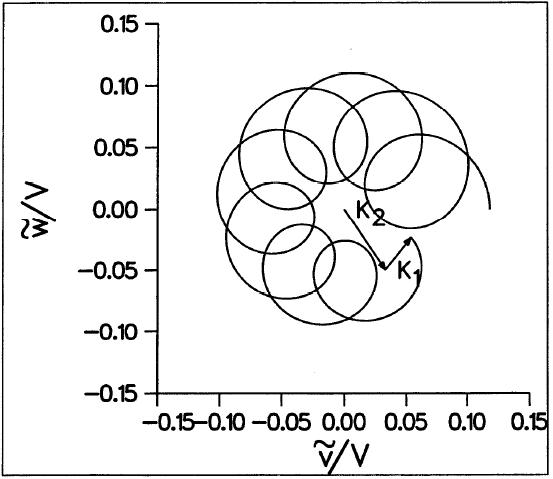
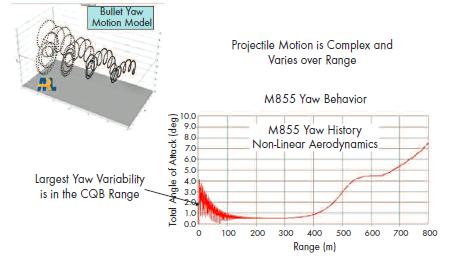
Bullets from rifled barrels eventually achieve stability by yawing back and forth, while undergoing a larger revolution about the major axis of the trajectory. So quite obviously, it’s necessary to spin the bullet, and to spin it enough to give it stability, while protecting the need to nose over on the final part of its trajectory. Getting this twist rate and spin right has been a matter of much testing, internet fights, and lot of engineering study and heavy spending by the taxpayers. I know that my guns perform well, and so I decided to contact my manufacturer for his opinion on the matter.
In the interest of full disclosure, I have two Rock River Arms rifles, one Elite CAR A4 with a 16″ Barrel, twist 1:9, Quad Rail, and another competition gun with a muzzle brake and 18″ SS barrel with a twist rate = 1:8. I have recommended RRA rifles to my readers before, but there are many good guns on the market. Your probably have one. I sent a list of three questions to RRA, and Steve gave me these responses (the question isn’t included because it wasn’t forwarded back to me, but it’s apparent what I asked except for the first question, which was basically does RRA warranty their 1 MOA for both M193 and M855. This is Steve’s response.
Herschel,
Thanks for your questions. I’m going to take them in reverse order.
3. 1:9 is adequate for many, but not all rounds typically used in an AR platform. Between .223 Remington and 5.56mm NATO, there are rounds from 45 to 90 grains (that I am familiar with) and I know of, but have never shot, lighter and heavier rounds. No single twist is going to handle all of them. 1:9 is adequate for a sizable number of them, however…including the two most commonly available, in bulk and at reasonable prices…55gr FMJ (M193)and 62/63gr FMJ (M855). It is not ideal for rounds lighter than 50gr nor those over 68 or 69 grains, which is why there are other twist rates commonly available…including from RRA. We offer a 1:12 24” bull barrel for our Varmint hunters who prefer to use the lighter bullets for prairie dogs and other targets, and both 1:7 and 1:8 barrels in a variety of configurations for those who want to shoot heavier bullets…up to and including the newer 77gr loads and 80gr VLDs. We’ve also run custom twists for a limited number of contracted purchases.
2. Yes. 1:9 does well with both M193 and M855. Different barrels perform differently, but 1:9 generally stabilizes both weight/length bullets fairly well, It neither over nor under spins either and does not produce key holing.
1. The hardest question to answer. Neither M193 nor M855 are notoriously accurate rounds. They meet military, not match, requirements. Our accuracy claims are the rifle’s capability…but the shooter and ammo have to do their parts. There are loads that are commercially available and claimed to be “M193” and “M855” equivalents that clearly aren’t, and they aren’t capable of ”minute of bad guy” at 100 yards, let alone the .75 to 1.5 MOA claims that we make for our different rifles. That is no reflection on our rifles or barrels, or the shooters…unfortunately there is some real crappy ammo on the market today, which will not perform well out of any barrel, of any twist rate.
Thanks.
Steve/RRA
This is a good response, but let’s not stop here. While perhaps not recalled by some, American Rifleman has given us a fairly comprehensive look at 5.56mm ammunition and barrel twist rates in an article entitled Testing The Army’s M855A1 Standard Ball Cartridge. It is rich with history on how the Army fielded the M855A1. Ignore the issue of the M855 versus the M855A1 for a moment and consider the background.
Accuracy cannot be assessed without addressing the rifle barrels’ twist-rates. In the early 1980s the M855’s 62-grain bullet was developed for the M249 Squad Automatic Weapon (SAW). For purposes of interoperability, the same load was adopted as the M16A2 rifle’s standard ball as well. A February 1986 U.S. Army study noted that the M855’s bullet required a “1:9 twist [which] would be more appropriate for the M16A2 rifle, improving accuracy and reliability.” Multiple studies confirmed the 1:9-inch twist requirement.
But then a problem arose. The U.S. military’s standard M856 5.56 mm tracer round was longer, heavier (63.7 grains) and slower than the M855 ball, and simply would not stabilize with a 1:9-inch twist barrel. Thus, despite it doubling M855 group sizes, the M16A2 (and later, the M4) specified a 1:7-inch rate-of-twist barrel to stabilize the tracer round. It remains so to this day. Therefore, M855A1 was test-fired with both 1:7- and 1:9-inch twist barrels, and it was verified that this new cartridge is consistently more accurate in the latter barrels-as was its predecessor.
Don’t slip past these paragraphs, because they explain why “Milspec” is 1:7. It isn’t because 1:7 shoots M193 or M855 more accurately. It’s because of the weight of tracer rounds. As we’ve discussed before, the term Milspec doesn’t mean better, or worse, or anything at all except that it precisely meets the specifications outlined in the purchase order(s), excepting whatever variance notifications they might make on a given batch of guns.
The M855A1’s developers have described it as yielding “match-like” accuracy, which most rifle shooters would define as one minute-of-angle (m.o.a.), or groups measuring no more than 1 inch at 100 yards. While the new ammunition has proved more accurate than the green-tipped load it replaced, testing did not yield match-like accuracy, especially in the standard 1:7-inch twist-rate found in today’s M4s and M16s. At 100 yards, the best group with a 1:7-inch barrel was 1.62 inches (1.6 m.o.a.). At 300 yards. it similarly fired 1.6 m.o.a. (4.9 inches) and widened to 1.8 m.o.a. (7.5 inches) at 400 yards. At these same distances, firing the M855A1 through a 1:9-inch twist barrel reduced group sizes by approximately half.
The tests demonstrated that 1:9 twist produced better accuracy, approximately twice as accurate. Now take note what the testers found with the newer M855A1 regarding repeatability.
On average, the new ammunition produced one flyer in roughly each five rounds, which, it can be argued, exaggerated the group sizes. Since the Army announced that, “On average, 95 percent of the [M855A1] rounds will hit an 8×8-inch target at 600 meters,” each group’s most errant bullet impact was discarded and group sizes recalculated. Statistically they improved, but not enough to place 95 percent of rounds so close at 600 meters, at least when using the standard 1:7-inch barrel-which may explain why accuracy was less than expected.
There is one “flyer” in every five rounds. This seems to me to be a significant problem with this ammunition combined with the barrel twist, and the commenters don’t seem to like it very much either. Finally, this.
When U.S. Army shooters twice fired public demonstrations of the new round, they did not employ standard 1:7-inch twist M16A2s or M4s, but accurized, match-grade, stainless-barreled rifles from the Army Marksmanship Unit (AMU). I contacted the AMU and learned that these rifles did not have standard-issue 1:7-inch barrels, but most likely 1:8-inch twist, which probably accounts for their “match-like” accuracy.
Isn’t that rich? The Army made claims of “match-like accuracy,” and proved the rounds shooting out of different barrels than are deployed with Soldiers, using 1:8 twist, not 1:7 twist.
The American Rifleman article goes on to discuss in some detail the performance of the M855A1 with slim-profiled targets like malnourished tribal fighters in Afghanistan (so-called “ice picking” the target without fragmentation), performance at barrier penetration (concluding that it is better than its predecessor), and its lethality once it does penetrate barriers. I recommend this reading to you. It’s well worth the time.
So to summarize what we know, remember some basic things. First, the bullet has to be spun to give it gyroscopic stability. This spin needs to match the bullet (including mass and length), and care must be taken not to over-stabilize the bullet. If you shoot typical .223 ammunition (55 gr.), or M193 or M855, a twist rate of 1:9 is probably just about ideal. You’ll probably lose some accuracy with a higher twist rate.
This loss of accuracy is likely not significant for a lot of shooters. If you shoot much heavier ammunition (and there is a lot on the market), you probably need to consider a twist rate of 1:8. Finally, none of this matches the value of good ammunition or good shooting.
That’s the good news. Most guns can outperform the shooter, and I know that’s the case with me. I’m a decent shooter. Not great, but decent. I’ve taken my Tikka T3 .270 bolt action rifle and literally put rounds through the same hole at 100 yards (with slightly more tearing of the same hole in the paper). On the other hand, this is with a good scope, no wind, a cool and comfortable day, all day to work my craft and thus no time pressure, no one else to be concerned about, lots of coffee to wake up, and a full belly.
But if I had kept records, it wouldn’t have happened again exactly like that since, theoretically, even with perfect ammunition, considering barrel harmonics and that physical processes like this are a heuristic phenomenon, if I had continued to log my shots this way, it would have doubtless shown a standard distribution (distance between each shot and mean).
But regardless of the details, you’ve done it before. Control breathing … get good sight picture … back out of the shot if you’re not mentally right … know where your trigger breaks … and so on. You know the drill, since you’ve done it many times. It’s perhaps the purest pleasure a shooter can have.
Now throw in simple annoyances like a whining partner at the range, losing daylight and time pressures, hunger, and any of the other 100 possible nuisances that can sap your accuracy. Then your accuracy goes to hell, doesn’t it? Now, combine that with wearing heavy gear and being shot at, and I’m sure it diminishes your control over your weapon. Thankfully, I only have the experiences of my former Marine son conveyed to me.
The good part of this is that regardless of your barrel twist rate, if your AR-15 is reliable, even if it’s not top of the line, it can probably outperform you. That means getting better isn’t a matter of getting a new rifle or barrel with a different twist. It means practicing with your rifle, sometimes under duress. It also means buying good ammunition. Steve at RRA is right. The shooter and ammo have to do their part. I object to cheap ammunition just like I object to cheap engine oil. I’m trying to develop the discipline at the store or online to buy better ammunition.
Right, I’ve got it. I feel your objection. Good ammunition (e.g., Hornady $2 per round .270 for my Tikka) hurts. This is my wealth, and it’s hard to part ways with it since it’s hard to earn it. But using bad ammunition at the range makes it hard to impossible to assess your practice. Use of my value pack Federal .223 at the range means that my accuracy is irrelevant if I’m using the same reticle holdovers I would for 5.56mm since the muzzle velocity is different (and very slightly lower than the 5.56mm). You’ve got the picture.
The best way to get better accuracy is probably not to get a better gun. It’s to practice with the one you’ve got.
Here is a related video I found interesting on gyroscopic stability. He’s wrong about the math being incomprehensible, but it is rather difficult if you’re involved with partial differentials or worse, the Navier-Stokes equations in CFD. You need some specialized training in mathematics in order to tackle that. You don’t have to know any of that in order to understand the basics of shooting.
This discussion probably won’t end the debate on barrel twist rate, and it certainly won’t end the fight between the Army and Marine Corps (who doesn’t want to deploy the M855A1). But I hope it was helpful to you.
I can no longer place any confidence in the AR-15 to defend myself in a time of disaster or urban unrest. To protect myself and my family, I have completely switched over to the AKM family of weapons—a semi-automatic variant of the legendary AK-47. I know that somewhere, someone is saying out loud that I am a dumb-ass or a communist. When I first discussed this with one of my close friends, a career Army infantryman with more than 16 months of combat duty spent with the 172nd Infantry Brigade, he just shook his head in disagreement. I remember telling him over some beers, and he just kept asking “Why?” with a look of disappointment and bewilderment on his face.
The M16A2 was my primary weapon for my entire career in the United States Air Force; I knew it inside and out. I was one of the few USAF engineers I knew who loved target shooting, going to the range, hell, I even liked to clean guns. So why walk away from a weapon platform I had used or owned for over 20 years? The answer comes down to two major reasons: supportability and simplicity.
Any military or company that uses AR-15s/M4s has much deeper pockets than I will ever have. Major corporations and military units typically have a robust supply system that can provide an individual any desired replacement part they may need. This is necessary, because the variation in parts from manufacturer to manufacturer is immense, making interchangeability difficult.
The buffer spring and buffer weights alone have more than a dozen different variations depending on barrel length and number of coils on the buffer spring. Then, stop and consider the rifling twist rates in the weapon’s barrel and what projectile works optimally in them. Here is a sample of the variations and options on buffer weights alone.
[ … ]
The word simplicity might cause people to think that the AR-15/M4 is a difficult weapon to operate, and that is not the case at all. When I use the word simplicity, I think of overall use and maintenance of the weapon. How maintenance-intensive is it? What type of lubricant do I have to use for my situation?
With the AR-15/M4, there is an entire segment of the shooting world that will launch into heated arguments about what lubricant works best. I have seen the debates between CLP versus Frog Lube versus Fire Clean. Running the gun ‘wet’ or ‘dry’ is another topic of debate. I have even heard people who say they use WD40 or Castrol Slick 50 on their AR-15s/M4s.
Properly lubricating a weapon isn’t rocket science, but improper lubrication can lead to the weapon jamming at the most inopportune moment. In the case of over-lubrication, in a dusty or sandy area, excessive dirt and debris can accrue on the weapon’s working parts, causing stoppages and malfunctions.
Consider my selection. The AKM can be lubricated by just about anything that has some degree of viscosity. Bearing grease, lithium grease, motor oil, 80W 90 gear oil, the tears of liberals, the blood of unicorns, you get the idea. There is a scene in the video below (at about the 20-second point) where you can see an AK-47—buried in the dirt and clay of Africa for 18 years—rendered operable with only a can of motor oil.
Good grief.
And AR-15s can be made to function with a dab of motor oil too. And he acts like there’s no such thing as AR-15 stress tests out there on YouTube. I’ve linked and embedded so many they’ve almost become boring to watch now.
So it all boils down to this after reading this tiresome and stolid article. The author doesn’t like to think about anything, doesn’t like variability, doesn’t like to be able to modify his gun, doesn’t like variants on a theme, and doesn’t want to have to worry about the engineering mechanics behind the rifle or proper selection of components. Therefore, he has found himself some canned excuses to jettison the AR-15. He’s lazy.
Eugene Stoner is unimpressed. I am too. If this is the best that web site can do, I won’t be returning. This piece is not even a thinker piece that makes you ponder the more complex issues behind gunsmithing or engineering. It’s completely un-compelling.
The telltale sign that it’s going to be a bad article was in this sentence: “I was one of the few USAF engineers I knew who loved target shooting, going to the range, hell, I even liked to clean guns.”
So there you have it – what a USAF “engineer” thinks about guns. Stick to airplanes. Go back to something you’re good at. I guess.
“Why I abandoned the AR-15” are words you’ll never see here at this web site except in mockery.

 9 years, 6 months ago